
Technology has changed how information is created, stored, located, and analyzed, giving legal professionals access to digital evidence that may not have been available in earlier forms of practice. Photographs, video recordings, electronic communications, location information, online records, metadata, and digital documents can all become relevant when researching facts or preparing a legal matter. At the same time, the volume of available information can make organization and verification more challenging.
Digital tools can help legal professionals collect information efficiently, identify relevant records, build timelines, and manage large collections of files. However, technology does not automatically make evidence reliable. Questions about authenticity, accuracy, preservation, privacy, and context still require careful attention. Understanding both the capabilities and limitations of digital evidence can help legal professionals use technology more effectively while maintaining organized records and sound research practices.
Organize Digital Evidence From the Start
A large amount of electronic information can quickly become difficult to manage when files come from different sources. A personal injury attorney may encounter medical records, photographs, emails, text messages, surveillance footage, insurance documents, and other materials that need to be reviewed together. Creating an organized digital evidence system early can make later research more efficient.
The first step is separating original evidence from copies or working files. Original photographs, videos, and documents should be preserved without unnecessary editing, while copies can be used for annotations, analysis, or presentation. Consistent file names and folders can also make it easier to locate specific information later.
A practical organization system can include:
- Creating a dedicated digital folder for each matter.
- Separating original files from working copies.
- Recording the source and date associated with each file.
- Using consistent names for photographs and documents.
- Maintaining secure backups of important information.
- Limiting access to sensitive case materials.
Metadata can also provide useful information about when and how a file was created or modified, although it should be reviewed carefully. A well-organized evidence system can reduce confusion and make it easier to identify gaps before important information is needed.
Evaluate Digital Records in Criminal Investigations
Criminal investigations can involve substantial amounts of electronic information. Smartphones, messages, photographs, social media accounts, location records, financial information, and other digital materials may become relevant depending on the circumstances. A drug offense attorney may need to examine such information while also considering how it was obtained and whether its authenticity can be established.
Digital evidence can be useful because it may contain timestamps, communications, images, or other information that helps establish a sequence of events. However, electronic records can also be incomplete or difficult to interpret without additional context. A message, photograph, or location record may not explain the circumstances surrounding it by itself.
Important considerations include:
- Identifying the original source of information.
- Preserving files in their original form when possible.
- Reviewing timestamps for consistency.
- Separating verified information from assumptions.
- Protecting sensitive personal information.
- Documenting how evidence was collected and stored.
Search tools can make large collections of digital records easier to review, but automated searches may miss information because of spelling variations, incomplete indexing, or differences in terminology. Human review remains important when interpreting results and determining their relevance to a particular matter.
Use Technology to Reconstruct Traffic-Related Events
Digital records can provide different perspectives on events that occur on roads and at intersections. Dashcam footage, traffic-camera recordings, GPS information, photographs, smartphone records, and mapping applications may help establish where vehicles were located or how an event unfolded.
A traffic violation lawyer can use technology-assisted research to organize these materials into a chronological sequence. Time-stamped photographs or recordings may be compared with maps and other records to identify inconsistencies or clarify the order of events. Visualization tools can also make complex information easier to review.
When reconstructing an event, consider:
- Comparing timestamps across different digital sources.
- Identifying the location associated with each record.
- Reviewing video from multiple available angles.
- Checking whether footage covers the entire relevant period.
- Recording gaps or inconsistencies in the evidence.
- Distinguishing documented facts from interpretations.
Technology can make reconstruction more efficient, but digital records are not automatically complete or accurate. Device clocks can be incorrect, recordings may begin after an event has already started, and footage can lack important context. Reviewing the limitations of each source is therefore an important part of using digital evidence responsibly.
Combine Multiple Digital Sources to Analyze Collisions

Vehicle collisions can produce many types of digital information. Photographs may document damage and roadway conditions, while surveillance footage can show movements immediately before or after an incident. Vehicle systems, smartphones, GPS records, and electronic communications may provide additional information when relevant and legally available.
A car accident lawyer can organize these sources to create a clearer picture of an event. Rather than relying on one photograph or video, digital evidence can be reviewed collectively to determine whether different sources support or contradict one another. A timeline can help place individual records into a logical sequence.
Useful evidence-management practices include:
- Preserving original video files.
- Recording where photographs were taken.
- Comparing timestamps across sources.
- Organizing images according to location or subject.
- Maintaining an index of collected evidence.
- Identifying missing periods or unavailable recordings.
Digital mapping tools can also help researchers understand distances, intersections, roadway layouts, and other physical details. However, maps and digital imagery may not reflect conditions at the exact time of an incident. Researchers should therefore distinguish historical evidence from information showing only the current condition of a location.
Use Digital Research Tools for Future Planning
Digital technology has become particularly useful for organizing documents and conducting legal research involving long-term planning. Estate planning can involve numerous documents, property records, beneficiary information, account details, and other materials that need to remain accessible and organized over time.
Estate planning lawyers can use document-management systems to organize files and maintain records associated with a client’s planning documents. Digital research databases can also make it easier to locate relevant legal information and review changes that may affect planning decisions.
A useful digital organization system can include:
- Clearly labeled folders for major planning documents.
- Separate storage for drafts and finalized documents.
- Secure access controls for sensitive information.
- Records identifying document versions and dates.
- Backup copies stored in secure locations.
- A system for reviewing information when circumstances change.
Security is especially important because estate planning materials may contain sensitive financial and personal information. Password protection, access restrictions, secure storage, and careful sharing practices can reduce unnecessary exposure. Digital organization can make information easier to manage, but it should be combined with regular review and appropriate safeguards.
Account for Unclear or Missing Digital Information
Digital research does not always produce a complete record. Files may have been deleted, accounts may no longer be accessible, recordings may have been overwritten, or databases may contain incomplete information. Researchers need to recognize these limitations rather than treating an absence of digital information as proof that something did or did not happen.
The phrase nil representation may arise in legal or administrative contexts where the absence or lack of representation needs to be documented accurately. When digital records are incomplete, professionals should clearly distinguish between information that was located, information that could not be obtained, and conclusions that cannot be supported by the available material.
When information is missing, document:
- What sources were searched.
- Which records were available.
- Which records could not be accessed.
- Whether files appeared incomplete or altered.
- Any known limitations affecting the search.
- What additional information could potentially clarify the issue.
Search technology can speed up the process of locating records, but it cannot retrieve information that no longer exists or is inaccessible. Maintaining a clear record of the research process helps others understand the limits of the available evidence instead of assuming that a search result represents the complete record.
Preserve Digital Evidence in Serious Cases
Serious legal matters may involve evidence that exists in many digital formats. Surveillance footage, medical records, photographs, electronic communications, vehicle data, and other records can become relevant depending on the circumstances. Because some digital information may be automatically deleted or overwritten, timely preservation can matter.
Wrongful death attorneys may need to work with large collections of records while maintaining careful documentation of where information originated. A preservation process should account for both the content of a file and the circumstances surrounding its collection. Original materials should generally be kept separate from files used for analysis or presentation.
A preservation process can involve:
- Identifying potentially relevant devices and accounts.
- Preserving original files when possible.
- Recording dates and sources.
- Maintaining secure storage.
- Limiting unnecessary changes to evidence.
- Tracking who has accessed or handled important files.
Digital evidence can also contain information unrelated to the legal matter. Access should therefore be limited appropriately, particularly when records contain private communications, financial information, medical information, or other sensitive material. Good evidence management balances preservation with responsible handling of information.
Research Immigration Records and Requirements Digitally
Legal research technology can make it easier to locate government information, legal authorities, procedural resources, and supporting documents. Because immigration requirements and procedures can involve detailed rules and changing information, professionals need reliable methods for identifying the information applicable to a particular matter.
An immigration attorney may use digital research resources to locate official forms, instructions, legal authorities, and procedural information. Digital case-management systems can also help organize supporting documents and track important dates. However, information found through a general search should not automatically be treated as authoritative.
Effective digital research practices include:
- Starting with authoritative government or legal sources.
- Checking publication and update dates.
- Recording relevant deadlines.
- Tracking document versions.
- Protecting personally identifying information.
- Organizing supporting materials by purpose.
Digital document systems can reduce time spent locating records, but organization is only useful when the information is current and properly identified. Keeping a clear record of the source for important information can also make later review easier, particularly when rules or procedures change.
Analyze Digital Evidence From Bicycle Collisions
Bicycle collisions can generate digital evidence from several different sources. Smartphone photographs, surveillance cameras, vehicle recordings, mapping applications, fitness devices, messages, and other electronic records may help document the circumstances surrounding an incident when they are available and relevant.
Bicycle accident lawyers can organize these sources to examine location, timing, roadway conditions, vehicle movements, and other documented details. A photograph may show a particular road condition, while video may provide information about movement through an intersection. When several sources are available, comparing them can help identify whether they are consistent.
Researchers can organize collision evidence by:
- Recording the location associated with each file.
- Preserving original photographs and recordings.
- Comparing timestamps across devices.
- Organizing evidence chronologically.
- Mapping relevant locations.
- Identifying gaps in available footage.
Digital information should still be evaluated carefully. Fitness devices and smartphones may use different methods to record location or time, and surveillance cameras may have limited views. Technology can provide useful information without necessarily providing a complete account of an incident.
Use Technology to Reconstruct Pedestrian Incidents
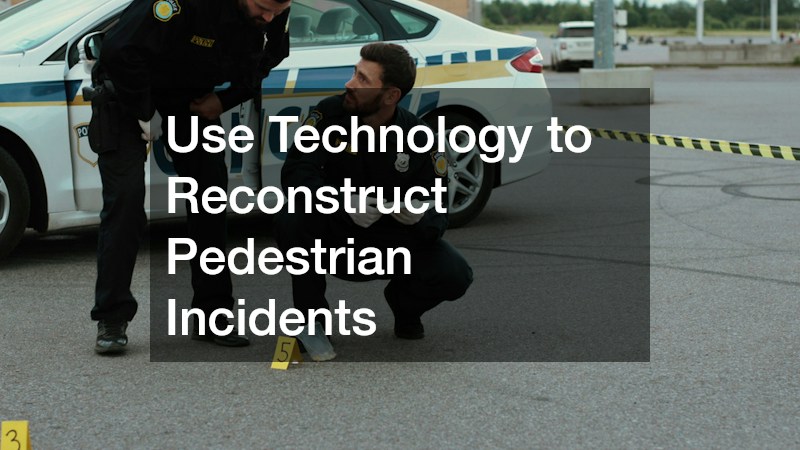
Pedestrian incidents can involve complicated interactions among people, vehicles, intersections, signals, and surrounding conditions. Digital evidence may provide several perspectives that help researchers examine what happened. Traffic cameras, business surveillance systems, photographs, smartphone information, maps, and other electronic records may all be relevant depending on the circumstances.
A pedestrian accident attorney can organize these records into a timeline and use mapping tools to visualize locations. Comparing multiple sources can help identify where each record fits within the sequence of events. For example, video may establish movement while photographs document the physical environment afterward.
A technology-assisted review can include:
- Identifying all available video sources.
- Comparing timestamps between recordings.
- Mapping the relevant intersection or roadway.
- Reviewing visibility and surrounding conditions.
- Organizing photographs by location.
- Documenting gaps in the available evidence.
Researchers should also consider whether digital records accurately reflect the relevant time period. Current online maps or street imagery may differ from conditions that existed when an incident occurred. Using technology effectively therefore requires both detailed organization and careful attention to when each source was created.
Technology works most effectively when it supports a structured research process rather than replacing careful legal analysis. Professionals can benefit from preserving original materials, documenting sources, reviewing timestamps, maintaining secure storage, and identifying gaps in the available record. They should also consider the limitations of each digital source before relying on it. As legal technology continues to develop, thoughtful evidence management and reliable research practices remain essential for turning large amounts of digital information into useful, understandable, and properly supported case materials.
